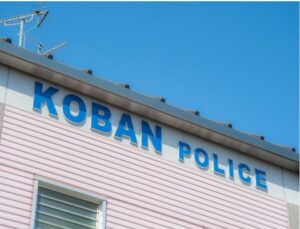
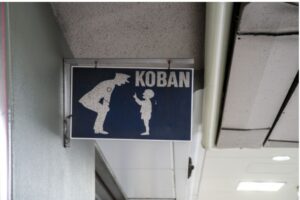
In Japan, there are small police stations everywhere, such as in residential areas and in front of train stations. These are called KOBAN. A KOBAN is a unique part of Japan’s local police system which deeply connected to local communities and trusted by residents. In recent years, this system has attracted global attention, and many other countries are adopting it.
Japan is known worldwide as a country with low crime and a safe living environment. The system of KOBAN also contributes it.
So, what exactly is KOBAN? How have they contributed to maintaining public safety? Let’s explore the system and role of KOBAN, the key to Japan’s public safety.
Why is Japan said to be Safe?
Evaluation of Japan’s Safety
Japan ranked 12th in the 2025 Global Peace Index, and second in Asia after Singapore.
This ranking comprehensively evaluates safety, social stability, and low crime rates, showing that Japan’s good public safety is recognised internationally.
In fact, many foreigners who have visited Japan say things like, “Even if you lose your wallet on the train, it will be returned,”and “I feel safe walking alone late at night.” This sense of safety is a symbol of Japan’s high level of public safety.
Source:Global-Peace-Index-2025-web.pdf & United Nations Office on Drugs and Crime
Factors that Contribute to Japan’s Safety
Japan’s safety is not because of one single reason. It is the result of many things working together.
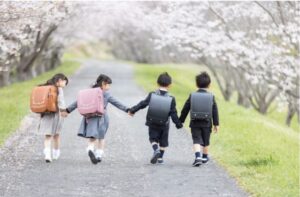
Japanese people have a strong habit of following rules and caring about others. From a young age, schools and society teach them to help people who need support and to act with good morals. Because of this culture, Japan has a system where even lost items are usually returned to their owners.
Another important reason for Japan’s safety is the community-based KOBAN system. A KOBAN is more than just a small police station. It is a place where police officers regularly meet and talk with local people. They help prevent crime, keep traffic safe, and assist lost children or elderly people. Because KOBANs are closely connected to the community, they can work effectively, gain residents’ trust, and make the area safer.
What is the Role of KOBAN in Japan?
We have introduced the high level of public safety in Japan, but what kind of activities does the KOBAN do? Let’s take a closer look at the roles and functions of KOBAN in Japan.
The Diverse Roles of KOBAN
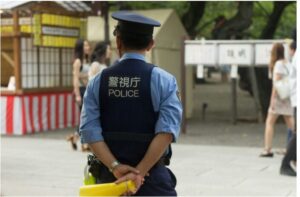
KOBAN officers handle many tasks beyond crime prevention:
- Patrolling the community
- Quick response to incidents and accidents, and receiving emergency calls
- Receiving and returning lost items
- Guidance and assistance for tourists
- Responding to consultations from local residents (such as daily life issues, monitoring children and the elderly, etc.)
KOBAN is truly a ‘reliable place to turn to in times of need,’ building trust with local residents through daily interaction. Rather than merely maintaining public safety, they are supporting the entire community by valuing human connections.
Koban: The Unique System Protecting Local Residents
As we can see, the KOBAN has many roles in keeping the community safe. But its real strength is being a local safety net. One of the most important points is that it acts like a “community watchtower,” open to everyone 24 hours a day.
A 24-Hour Community Watchtower Open to All
In Japan, KOBAN is staffed by police officers around the clock, ready to respond to incidents and accidents at any time, and to receive consultations from residents. They are truly an open door for the community—a place anyone can rush to in times of trouble. In many cases, the regular visibility of police officers at the KOBAN helps build trust with residents, and simply knowing there is the KOBAN nearby gives people a sense of security. The constant light shining from the KOBAN can be likened to a lighthouse watching over the safety of the neighborhood. This unique Japanese system serves as a source of reassurance for local residents and forms a fundamental pillar supporting Japan’s overall public safety.
How did the KOBAN start?
As we have seen, the KOBAN is now deeply rooted in local communities as an important institution supporting public safety in Japan. So, how did the KOBAN come into being and develop into its current form? Let’s trace its history.
The ‘KOBAN’ Began in the Meiji Era
The first KOBAN in Japan was established in 1874 (Meiji 7). At that time, it was called a ‘Kobansho,’ but it was not a building like the ones we see today. It was merely a designated location for police officers to stand guard. Police officers went from the police station to the Kobansho and worked in rotation.
The Birth and Expansion of Koban as Facilities
In 1875 (Meiji 8), the Tokyo Metropolitan Police Department decided to establish actual facilities called Kobansho. This marked the prototype of today’s KOBAN. From these facilities, police officers began patrolling the surrounding areas, and the system gradually spread nationwide.
In 1881 (Meiji 14), the term Kobansho was changed to Hashutsujo (branch police stations or sub-police boxes). Then, in 1888 (Meiji 21), in addition to these Hashutsujo, Chuzaisho (residential police boxes where officers lived on-site, especially in rural areas) were established throughout the country.
This development led to the establishment of the community-based police system centered on KOBAN and Chuzaisho that continues today. More than a century later, KOBAN and Chuzaisho are now spread not only across urban areas but also in rural communities and even remote islands, safeguarding the safety of residents in every corner of Japan.
Source: National Police Agency “The White Paper on Police 2004”
Japan’s “KOBAN” Expanding Across the Globe

Japan’s KOBAN is a highly practical and trusted system that safeguards community safety while remaining deeply rooted in local neighborhoods. Today, this unique Japanese community policing system is attracting worldwide attention and spreading internationally.
The World Takes Notice of Japan’s Local “Watchtower”
The Japanese model—police officers protecting public safety as members of the local community—has proven to be both innovative and appealing to many countries. The KOBAN system has now been adopted in places such as Singapore, the United States, Brazil and Indonesia, where its positive results have drawn considerable interest.
Success Stories in Other Countries
- Singapore: In 1983, Singapore introduced KOBAN modeled after Japan’s system. Within just five years, the number of criminal incidents had been cut in half, which is a dramatic improvement.
- United States: The Japanese-style KOBAN has been introduced in locations such as Manhattan, New York, and Waikiki, Hawaii. Also in Los Angeles, the Little Tokyo KOBAN was established in 1996 as a community-based safety and information center. Staffed largely by volunteers, it plays a vital role in providing crime prevention, tourist guidance, and local support, reflecting the spirit of Japan’s neighborhood policing adapted to a multicultural urban environment.
- Brazil: In 2005, the state of São Paulo established KOBAN. Over the following ten years, the number of homicide cases reportedly dropped to about 20% of previous levels, demonstrating the effectiveness of Japan’s public safety model in a local context.
Source: Little Tokyo Koban – LTPSA - Indonesia: Since 2001, Japan has been implementing the Indonesia National Police Reform Support Program. Experts from Japan, including an advisor to the Chief of the National Police and a program manager, have been dispatched to provide cooperation in the dissemination of Japan’s KOBAN system and in on-site forensic activities.
Source: National Police Agency “The White Paper on Police 2025″
From Japan to the World — Koban as a Pillar of Safety
In this way, KOBAN is far more than just police facilities; they are recognized around the world as symbols of safety and trust rooted in the community. Born in Japan, the KOBAN has now become a new model for maintaining public safety worldwide.
Source:CBC WEB , Ministry of foreign affairs of Japan
The Power of the Koban

We have learned how Japan’s KOBAN—small police boxes that started in Japan and have now spread to other countries as the “Global KOBAN”—help keep people safe. KOBAN is at the center of Japan’s strong public safety system and is known worldwide for its history, daily work, and close ties with local communities.
Its job is more than stopping crime. KOBAN officers build trust with residents, give help in daily situations, and form the base of Japan’s unique way of keeping communities safe. In the future, KOBAN will keep changing with the needs of local people, staying a trusted place that protects everyone’s safety and peace of mind.
For those who want to know more about Japan and Japanese education
Shin Edupower provides programs that enable online exchange and collaboration between schools in India and Japan, as well as study tours to Japan for educators and students. If you would like to know more about education in Japan, please feel free to contact us here.